Get the latest price? We will reply as soon as possible (within 12 hours)

News

  • Tinplate packaging cans vs. aluminum alloy: Which is more environmentally friendly?
    04-28/2025
    Although the production process of tinplate packaging cans still requires energy consumption and generates carbon emissions, compared with aluminum alloys, the production process of tinplate packaging cans is more energy-efficient and environmentally friendly, and its recycling process has a lighter burden on the environment.
  • How to choose anti-corrosion coatings for printing tinplate cans?
    04-25/2025
    There are many types of anti-corrosion coatings for printing tinplate cans on the market. Common types include epoxy resin coatings, polyester coatings, polyurethane coatings, and fluorinated coatings. Different types of coatings have certain differences in anti-corrosion performance, high temperature resistance, and chemical resistance.
  • What are the standards for making cookie packaging tin with tinplate?
    04-24/2025
    When making cookie packaging tins, the size of packaging tins must be determined first. The choice of size not only directly affects the cost of packaging, but also the performance of the product in the market.
  • How can manufacturers extend the durability of tinplate sheets?
    04-23/2025
    In addition to tin plating, tinplate sheet manufacturers can also use other surface treatment methods to enhance the durability of the product. For example, some tinplate sheet manufacturers use anti-corrosion coatings (such as epoxy resin coatings, polyester coatings, etc.) to provide additional protection for tinplate sheet.
  • Is tinplate container better than plastic container?
    04-21/2025
    Tinplate containers and plastic containers have their own advantages and disadvantages and are suitable for different packaging needs. Tinplate containers are suitable for food or daily necessities that require long-term storage and high corrosion resistance, while plastic containers are suitable for the packaging needs of daily consumer goods with their lightness and economy.
  • Do you know the anti-corrosion performance of electrolytic tinplate?
    04-18/2025
    The anti-corrosion performance of electrolytic tinplate mainly comes from the tin layer. Tin is a metal that has strong antioxidant properties and is not easy to react with oxygen in the air, so it can effectively prevent the oxidation process on the iron surface.
  • Are tinplate food packaging cans suitable for preserving tea?
    04-17/2025
    Due to the moisture-proof, light-proof and anti-oxidation properties of tinplate food packaging cans, it can provide a relatively stable and closed environment for tea, thereby delaying the loss of tea flavor. Therefore, the use of tinplate food packaging cans can significantly extend the shelf life of tea.
  • What is the shelf life of tinplate cans?
    04-14/2025
    Generally speaking, tinplate cans have a long shelf life, usually more than two years or even longer, but the specific period still depends on the use environment of the can. If tin plate cans are placed in a humid, highly acidic or alkaline environment, the tin coating may be affected, thus shortening the overall shelf life of the can.
  • Why do tinplate packaging cans like offset printing?
    04-11/2025
    The advantages of offset printing are reflected in the following aspects: 1. High-quality printing effect 2. Suitable for large-scale printing 3. High color reproduction 4. Strong ink adhesion 5. Support for a variety of special effects 6. Environmental protection and safety
  • What color is tinplate sheet?
    04-10/2025
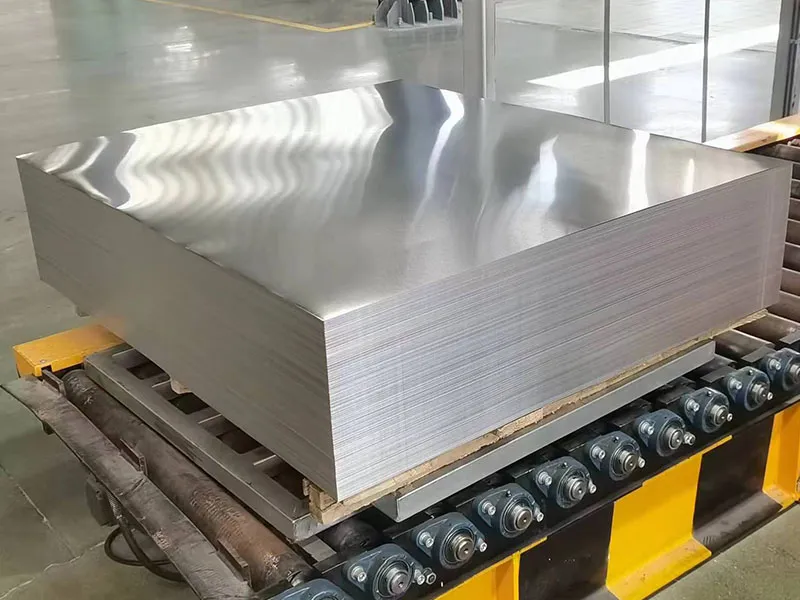
    As the main material of tinplate plate, low carbon steel itself has the natural color of metal, usually showing a silver-gray or iron-gray metallic luster. This color of the steel surface comes from the essential properties of its iron element, and usually has a strong reflective effect.
("[type='submit']")